This is Spinal Tap is probably one of my fathers favorite movies. The dry satire and punny nature of the film coincide perfectly with my fathers humor. Naturally, the first time I saw this movie I was quite young, and most of the humor went right over my head, actually the whole movie went right over my head because I had thought they were a real band. Since then I have seen in numerous times and the mocking nature thusly became evident. My favorite scene, that I laugh at every time I watch it is the "up to 11" part. (Below)
The sheer stupidity and thick headedness of these scene, for me, sets the tone of the entire rest of the film. Essentially it gets me into a ridiculously silly mood.
Recently, my father told me that even IMDBs rating of spinal tap is out of 11!
Heres the link to it; This Is Spinal Tap IMDB
How is it that capital punishment creates such a large uproar but the mistreatment of suspected, "suspected" terrorists is under wraps.
The idea that the president can simply authorize torture bewilders me. In no way has torture ever been addressed as illegal other than the Geneva Conventions. Morality, is what should be questioned, does America truly believe that everyone is equal when they treat detainees like dogs.
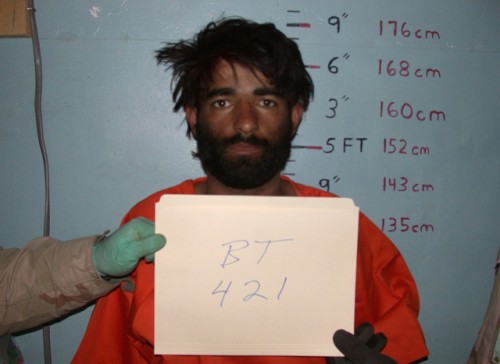
It all started with Dilawar, who was merely a taxi driver suspected of having information/working with about a terrorist group.
His torture and eventual death occurred in Bagram, before the abomination in Abu Ghraib. Sadly, the Bush administration was not only aware of the inhumanity, but most of the prisoners were innocent.
The soldiers that were interviewed in the documentary seemed to feel remorse for humiliating, hurting and embarrassing the detainees although in the pictures shown, it seemed like they enjoyed ruining those mens lives, like a bully in school they ridiculed and besmirched them.
Yet, it seemed like the higher ranked officers were the ones giving the orders torture. It is clear that higher powered politicians and army leaders tried to tip-toe and redirect people from the pressing questions of what truly happened in Bagram and Abu Ghraib.
This makes me question the ethics of our nations leaders, who seem noble. Could they in fact be putting on a facade and leading our country into a power thirsty anarchy against a so called "terrorist attack". I am not implying that there is no terrorism, but the torturing of the assumed terrorists, is not only unjust but seems extreme for just an assumption.
I was intrigued by inside job merely because it was so
relevant to me.
My father, he works in finance, he worked for Wachovia and
closely worked with AIG. After the stock
market plummeted, our lives flipped inside out. He was gone from 6 to 11
instead of 9 to 5. Stress filled our
whole household. That is where I think Inside
Job went wrong; the struggle in the office was evident, but the larger
struggle in the homes seemed to be lost.
I feel like although my life was so changed by the crash, I didn’t
relate very well to the documentary. Ferguson was more informative than
actually trying to evoke pathos, which I thought was oddly cold-hearted. Although it was lacking in emotion I did
think Ferguson excelled at displaying the panic and corruptness of the economy
and financial world. It seemed just disconnected from the average person to me.
When I first began the documentary, An Inconvenient Truth, my opinion was already set in stone. I heard from my teachers in high school that, yes, the Earth was warming, but apparently so were the other planets. I remember specifically, my 9th grade science teacher saying; "How can it be our faults, is it our fault that Mars is getting hotter also?" I believed it. It was a valid case. If the other planets were actually increasing in temperature, then blame could be pushed not onto us and our release of gases destroying our atmosphere, but onto the sun. Being the person that I am, after Al Gore, a politician that i respect, spoke of the radical warming on our planet back in 2006. I doubted my teachers and researched warming of the other planets.
This is what I found:
Turns out scientists know NOTHING factual about the warming of Mars or any other planet. Global warming most likely is caused by what Al Gore spoke of in An Inconvenient Truth. Which is us, humans are polluting the atmosphere with greenhouse gases. We are essentially destroying ourselves. And probably denying that we are doing so, just like I did until this documentary. I don't find myself ignorant, just extremely misinformed, like any other student that will go through my high schools science department.
Its truly disappointing, because what can we - as humans- do if most of the population doesn't even know the causation of this extreme warming other than its happening? We can do as much as my 9th grade teacher has taught me, which is nothing. Davis Guggenheim, the Director, brought this issue to life not only to entertain but to raise awareness in hopes that once we know what we are doing to our planet, maybe we will take action. I know I am more empowered to do good for the world because of it.
The controversial film, Jesus Camp, examined the youth of an Evangelical family. Levi O'Brien's family in particular.
In my opinion Levi O'Brien was one of the most well spoken twelve year olds I have ever witnessed. The documentarians found him equally as fascinating because of his forthright nature and maturity. They exploited his oddities and played up the differences between evangelical kids and "regular" kids. Levi seemed to know exactly what he was doing with his life, and displayed his impenetrable opinion intensely. I feel almost jealous about his purposefulness during the film. Yet I was left feeling like he wasn't really human.
After watching this interview with Levi five years later, I am left to realize that he too has immature qualities. Although he doesn't want to be a preacher anymore, like he stated in the film, he still believes in doing whatever God leads him to. This shows that although Levi changed his mind throughout his life he did not change his viewpoints on religion. Most likely because he was not taught any other way to percieve religion and therefore was pigeonholed into an Evangelical mindset. He claims his parents did not force him onto the beliefs of an Evangelist. But, it is quite hard to choose any other way of thinking if you know nothing else.
The most interesting thing about Levi, was brought to my attention at the end of the film. That throughout all the extremist characters in the documentary; like Becky Fischer, The O'Brien parents, and the man who spoke about abortion, Levi seemed like the most level-headed and sane person of the group. Their is no question that he loves Jesus like the others do, and has some radical thoughts, but he is the person I most related with. I confirmed my association with him when he said he did like the Harry Potter movies and that they were "just good films." That gave him a more normal vibe, to me, than Jesus Camp's "Levi."
Growing up in a Catholic and Jewish home, I was forced to make a lot of decisions to please certain parts of my family. I cannot fathom, however, being taught strictly by my family,and being homschooled like Levi did. And that is where we differ. I went to public school and was taught all ways of thinking and had a fair chance to choose my own opinion. That may have been the reason I was much more indecisive than Levi at his age, yet I came to my own understanding of religion, satisfied that it was my choosing. I don't believe Levi could say the same.
Also, I have posted a selection from Jesus Camp's score. I believe it catered to the eerie nature of the movie, and it exemplifies what the documentarians were trying to portray, which was an unsettling feeling in viewers. Jesus Camp Music
When examining Timothy Treadwell's experiences in the Alaskan Katmai National Park and Preserve, I noticed his constant decent into madness. Throughout his 13 summers in the Park he seemed to get increasingly obsessed with the bears and the idea that their enemy was society. Whether it was Herzag's intention to progressivly make Treadwell seem more and more unhinged, or merely because of Timothy's lack of exposure to people, over time Treadwell lost a sense of human reality. To me, it was almost reminiscent of Joseph Conrad's Novella, Heart of Darkness. In the Novella, the setting- the river - acted as the vehicle for Kurtz and Marlow's transformation from an operating human in society to an animal, a beast. Similarly, Treadwell's expeditions and loneliness seemed to drive him into extreme paranoia and slight psychosis over "intruders". Intruders that is, any person who came into the park was in Timothy's mind was there to harm the animals. Not to say that some of the people actually were, but a majority, like the park service, were there to protect both the people and animals. Inevitably, Treadwell deemed himself the "protector" of the bears, foxes and all the animals he loved so dearly. This man, Treadwell, who used to teach children through his melodramatic and quirky mannerisms about his fascination with bears, undoubtedly, became crazed with the power and feeling of uncivilized living, exactly like Kurtz and Marlo's savageness towards the end of the river/book. Although Treadwell did beleive in harmony, what confounded me was that he overlooked that in humans, like when he attacked the Airline employee in his journal saying "How much I hate the peoples world." As if Timothy himself was no longer a human, or a civilized one at that. But one thing is for certain, his installation of power over the bears was through respect, he would have done anything for those bears, even willingly give up his life. He loved them. Kurtz, on the other hand, ruled over his bestial natives by establishing fear alongside his power and murdered many of his people. Therefore, Treadwell's decent into "madness" was based on a belief that all living things are innately good, differing from Kurtz's station that was barbarous and displayed an idea that everything was innately evil.
 This is Spinal Tap is probably one of my fathers favorite movies. The dry satire and punny nature of the film coincide perfectly with my fathers humor. Naturally, the first time I saw this movie I was quite young, and most of the humor went right over my head, actually the whole movie went right over my head because I had thought they were a real band. Since then I have seen in numerous times and the mocking nature thusly became evident. My favorite scene, that I laugh at every time I watch it is the "up to 11" part. (Below)